 Infantry
Assault Badge by WH. Original Versus Copy. Another highly copied badge is the
common Infantry Assault Badge by the maker "WH" So far there is a
debate over who the makers "WH" actually is. For years it was
believed that the mark belonged to the firm of Wallter & Henlein of
Gablonz. However, recently an Original badge with this mark in a paper award
packet turned up with the makers name and address of "W. Hoebacher Wein on
the paper packet. The copy Infantry Assault
Badge comes
in both bronze and silver grades and is manufactured in a strange mixed metal
alloy reminiscent of zinc and has a good quality hinge and hook soldered to the
reverse. The overall quality is very impressive and few people realize that
this badge is in fact a copy.
Infantry
Assault Badge by WH. Original Versus Copy. Another highly copied badge is the
common Infantry Assault Badge by the maker "WH" So far there is a
debate over who the makers "WH" actually is. For years it was
believed that the mark belonged to the firm of Wallter & Henlein of
Gablonz. However, recently an Original badge with this mark in a paper award
packet turned up with the makers name and address of "W. Hoebacher Wein on
the paper packet. The copy Infantry Assault
Badge comes
in both bronze and silver grades and is manufactured in a strange mixed metal
alloy reminiscent of zinc and has a good quality hinge and hook soldered to the
reverse. The overall quality is very impressive and few people realize that
this badge is in fact a copy.
Showing posts with label war medals for sale. Show all posts
Showing posts with label war medals for sale. Show all posts
Thursday, 5 January 2017
The Infantry Assault Badge at Thirdreichmedals.com
Infantry
Assault Badge by WH. Original Versus Copy. Another highly copied badge is the
common Infantry Assault Badge by the maker "WH" So far there is a
debate over who the makers "WH" actually is. For years it was
believed that the mark belonged to the firm of Wallter & Henlein of
Gablonz. However, recently an Original badge with this mark in a paper award
packet turned up with the makers name and address of "W. Hoebacher Wein on
the paper packet. The copy Infantry Assault
Badge comes
in both bronze and silver grades and is manufactured in a strange mixed metal
alloy reminiscent of zinc and has a good quality hinge and hook soldered to the
reverse. The overall quality is very impressive and few people realize that
this badge is in fact a copy. 
Thursday, 10 November 2016
The 1939-45 British War, Defence and Campaign Stars
 For most collectors, British world war two medals
and stars are a frustration. These awards were issued un-named, so unless you
can get some corroborating material, or the awards come with a named medal,
it's very hard if not impossible to find what the recipient did to achieve
these awards. Unlike German world war
two medals and badges, given for
individual campaigns or areas, the British stars and war and defence medals
were a blanket affair so to speak. Let's take the 1939-45 stars as an example.
For most collectors, British world war two medals
and stars are a frustration. These awards were issued un-named, so unless you
can get some corroborating material, or the awards come with a named medal,
it's very hard if not impossible to find what the recipient did to achieve
these awards. Unlike German world war
two medals and badges, given for
individual campaigns or areas, the British stars and war and defence medals
were a blanket affair so to speak. Let's take the 1939-45 stars as an example.Tuesday, 13 September 2016
Original Wartime Medals and Badges for sale
Medals have always
been an outward sign of bravery and valour and thus they remain ever popular to
both the collectors and investors worldwide.
With
most Countries to choose from around the World, British and German
medals are the most sought after. If you are someone sourcing these
medals, then please visit www.thirdreichmedals.com. This site is one
of the best places where you can find available a wide range of both
German and British war
medals for sale, along with many other medals and badges from around the
World. One Country, gaining fast popularity in this field, is Finland. There
are a wide variety of awards, badges and medals which are both attractive and
well designed. With Finland's colorful past history, there are many
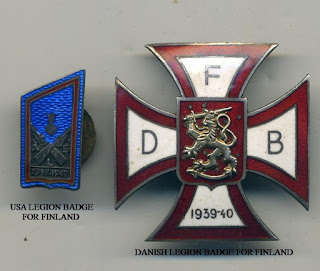
unusual and interesting stories related to these awards. For example, the Badge
of the American Legion, formed from American Volunteers who helped Finland
fight against the Russians from 1939-1940, along with the Danish Volunteer
Cross for Danish volunteers who also served against the Russians. Whereas
a year later, several of these Danish volunteers were again fighting
against the Russians with Germany, but the Americans were fighting against
Germany and Finland, their former allies and comrades in arms!
Also, on the
site, there is a good selection of rings, watches, books, and bravery
decorations.
Third Reich Medals is a non political firm dealing in all kinds of historical items. They are recognised as one of the UK's top dealers in German and British medals, badges and awards. Popularity of family and social history has fuelled the market, with people's love of history and romanticism of the past. Medals appear to give people a key into this.
Third Reich Medals is a non political firm dealing in all kinds of historical items. They are recognised as one of the UK's top dealers in German and British medals, badges and awards. Popularity of family and social history has fuelled the market, with people's love of history and romanticism of the past. Medals appear to give people a key into this.
The company Jamie
Cross Collectable provides the services soliciting wants
list also, i.e. if you have a particular medal you are searching for, you
can leave your details with them and they will look for same on
behalf of you. Once sourced, the company will contact you and you will have
first refusal, if you still require this item. Please note, there is
no obligation for buy.
There is
a mailing list you can join at Thirdreichmedals.com so that you can
get regular updates of the new listings and if an item catches your
eye, you are ahead of the game, i.e. you get to see items before they
reach What’s New page on the site.
Other items the
site boasts are useful articles, to help
the collector research and understand the military structures of the
awards and decorations used. There are useful hints and tips
on how to avoid reproductions creeping in to your collection.
There are also picture galleries to help you identify unusual items and even
ribbon bar charts to identify missing ribbons from awards. www.thirdreichmedals.com is
a site not to miss.
Thursday, 1 September 2016
Thirdreichmedals.Com Have a Good Range of British Military Medals For Sale

British
military medals are becoming exceedingly popular with
collectors, as the WWI ones can
be researched releasing a story of courage. Many millions of these First World War awards
were issued and therefore reading the man's
name and unit will release a story into the past. These medals were earned by wartime heroes who were
ordinary men and are beyond the value they command
for the huge amount of suffering these soldiers went through for the supposed war to end all wars. This
company aims to offer the collector a choice
of medals, badges and decorations from around the World with British and German items being a specialty.
They also buy back from collectors or even
buy in items medals and badges that they like. All items are all guaranteed 100% original to the time
period.
Thirdreichmedals.com deal in British
campaign medals, war medals, bravery decorations and the periphery that goes with it. On their site, you can
find anything from a medal for the modest
cost of £5 up to several thousand pounds. Also included are papers, books, pieces of pottery and other
interesting and curious items, all related to
military or social history from the 1800's through to 2000. Many collectors, who purchase medals,
love to explore or research and they offer
a range of services to help. Free advice is gladly given on storage, cleaning, and displaying.

With the ever
increasing market, medals appear to be popular investments by both ordinary collectors and by
former financial institutions that a few years
ago, purchased large quantities of British war medals squeezing
the market and increasing the
prices, Also, boosting pension funds.
Thirdreich.com also solicits Wants lists. You are under no obligation to buy the item, but they will actively search items out for you and you will have first refusal.
There is a mailing list you can join. This updates you on site news and informs you when the site has been updated and there are some new items to look at.
Some of Thirdreichmedals.com customers over the years have been well known book publishers, historians, military museums, through to schools, colleges and universities and they pride their selves on their customer service, commitment to the hobby and awards for outstanding and environmentally friendly packaging - which also saves money for the customer- using major postal carriers. You can be assured that all contact and orders are treated with the utmost confidentiality. Thirdreichmedals.com looks forward to serving you in the near future.
Thursday, 4 August 2016
Collection of Military Medals and Badges from the Era of Napoleonic War
From
the moment Cain killed Abel, mankind entered into armed combat, brother
against brother, family against family, tribe against tribe and
nation against nation. History is littered with armed conflicts, from
bible times "Mighty Men" and "Men of Fame" are recorded, as
well as regiments and standards. In ancient Egyptian times, it is recorded
that regiments of crack chariot troops were picked from the rank and file.
Later in Roman times, standard bearers were chosen due to their bravery, and
given the honour of taking care of and protecting the regimental emblem or
standard. In medieval times, squires were rewarded with knighthood, and
knights with lands for valour and courage. But it was during the wars of
the 18th & 19th century that badges and then medals, came more to the
fore.
It
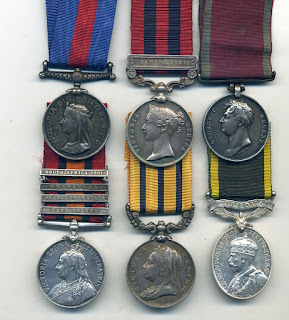
was during the Napoleonic war that the first real medal was given
on masse to British troops, (this was the Waterloo medal, which was named
to each holder). Among Great Britain's allies, the German states also
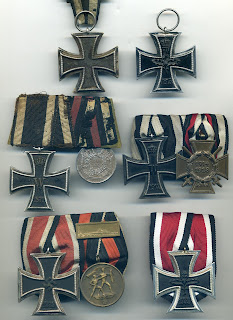
issued a Waterloo medal and the first bravery medal was also issued. This medal crossed over ranks and was the
first to be extended from private to general. The award was the Prussian Iron Cross of 1813.
As
the Western armies looked East, South and West, countries like
Great Britain, Germany, France, Spain and Portugal extended their empires,
at the same time issuing campaign medals to their armies. These awards from
Great Britain are usually named along the edge, whilst others, such as
Germany and France issued an award document with the award. It was not until the
outbreak of WWI that man's ability to annihilate whole areas became a
tragic reality. Millions of men died on foreign soil, nations were
engolfed within a space of a few months. Fighting had changed since the
beginning, weapons of war had become more effective, guns could cut down
hundreds of men in minutes, shells could travel miles and explode
and aeroplanes could drop bombs, ships could pound others with guns that
could also hit land targets, and with all these new weapons of war, new
trained men with new uniforms and new insignia were instituted. Medals
were issued not just for campaigns but for bravery and courage, not just
for fighting but for saving and surviving. When World War two broke out in
September of 1939, the new armies of the world had encompassed the air force,
and new types of troops, like paratroopers, u-boats and u-boat crews,
commando's and marines, came in the picture and the list goes on. All
these units have their own insignia. Some countries like Germany during
WWII, gave out campaign shields and cuff bands and combat badges for taking
part in armed combat, and when you see some of the photographs of these
veterans, you can work out their arms of service, where they have fought
and if they have been wounded and decorated for bravery.

Finland
was attacked by the USSR and for such a small country, managed to hold and
even beat, the red army in places. Many from Europe flocked to Finland to
aid this country with men from England, Germany, France and America as
well as Sweden and Denmark fighting side by side against the USSR.
All these men were awarded with badges or medals before being sent
home to their respective countries. It has been noted that Heinrich
Himmler was watching the struggle with the USSR and got his idea of
opening up the Waffen SS to these Nordic Peoples and it was a forrunner of
NATO. Many English soldiers were in Finland with one of them being
Christopher Lee, the well known actor.
With
British WWII Medals it’s a shame that most are unnamed, so the history of
these if there is no supporting paperwork, is lost. A 1939 Star could be
awarded to a battle of Britain Ace or a Home Guard member, but
you wouldn't know which it was, so a little history has been erased. The
firm of Jamie Cross is Non-political & items offered for sale are for
historical interest and investment only. We have a nice collection of German
War Medals, British Army Medals and Military Medals for
Sale.
Tuesday, 5 July 2016
The German Iron Cross, a listing of 2nd class Variation's

With the war being declared in September of, it is believed that several medal manufacturers were in fact caught out with the re- institution of the Iron Cross and as such, many variations were manufactured until a standardisation came in about 1940/41. These variations are highly collected by the Iron Cross collector and much discussion has been raised on them. The Iron Cross is Germany's top Bravery award, like Great Britain's Victoria Cross. This award -namely the Knights Cross of the Iron Cross- went on to capture the imagination of the German People and later, the World. Unlike Great Britain though, who has different bravery awards for different ranks, such as the Military Cross or Distinguished Flying Cross for Officers or the Military Medals or Distinguished flying medal for Other Ranks or NCOs’. The Iron Cross came in four grades (at the beginning of the War), being the Iron Cross 2nd Class for one act of bravery, the Iron Cross 1st Class for 4 or more acts of bravery, the Knights Cross of the Iron Cross, four outstanding act of bravery and the Grand Cross of the Iron Cross (only awarded once in World War two to Hermann Goring The Reichmarchell of the Luftwaffe). There were also two bars, one for the 2nd class ribbon of the Iron Cross 2nd class 1914, for those awarded the decoration in World War two, and a pin on "bar" that was worn over the Iron Cross 1st Class for 1914, if again the holder was awarded the decoration in World War two, this "Bar" was an opened winged eagle holding a swastika over a dated bar of 1939. Here though, we are going to be looking at the first of these awards and their variations.

The
first variant we shall discuss is the oversized Iron Cross. These measure
anything from 47 mm to 48 ½ mm and it was believed that these were to be
the new "Knights
Cross"
of Germany's newly instituted Iron Cross series. These crosses appear to have
been manufactured by one or two firms, as very few of the centres show any
difference in die characteristics.

The next type of variation is often called the Schinkel form. These are usually crosses that have been manufactured from parts utilised from WWI crosses being the frames but with newly made centres. Several of these were non magnetic and some have even been of one piece construction. To date, only one of these crosses has been encountered with a maker's mark although it would appear that several manufacturers’s made them. With these Schinkel crosses, you also get variations in the size of the swastikas and size of the dates as well as stylisation of the numerals and frame variations.
Then
comes a type called the straight arm cross or the Shinkel form type B.
This is in fact more like the original design by Karl Friedrich
Schinkel. One variation of this cross has a rounded No "3" which
leads us onto the next type that is like the standard type but with this
type of numeral configuration. For ease many call it the rounded
"3" type because it has the top part of the three rounded
instead of flat like the standard type of crosses. And like all of the
above this type can be found in first class as well as the

Occasionally you may find a Non Iron cross
that has a zinc or brass centre, these are usually the standard form but
you will find as stated early the type a Schinkel with this
feature. Also on the standard crosses you will find a verity of makers
marks stamped into the ribbon ring but on rare occasions you may find it
marked on the crosses frame like this L/12 example.

Finally
there are the one piece made examples that come in a number of metals
ranging from nickle silver to zinc, But be very careful with these as they
have been heavily copied On a rather sad note, these crosses have now been
reproduced both in the first and second class forms in both the standard
pattern types and the schinkel type a patterns and care must now be
exercised with these crosses. On the first class Shinkel types, several reproductions have been seen
with their pins marked 800 and Godet, whereas the second class crosses
have had their rings stamped with post 1941 marks, again a practice that
would not have been encountered on them.…
To
our knowledge, none of the other styles have been copied, but we feel this
is only a matter of time, with many collectors of the Iron Cross wanting
to fill the gaps in their collection after the release of the
excellent book "The German Iron Cross" by Gordon Williamson.
This has not only spurred on collectors, but also the repro manufacturer's
to take their art to newer forms. So what were once considered to be safe
purchases must, like the rest of our hobby, be scrutinised.

The
firm of Jamie Cross is Non-political & items offered for sale are for
historical interest and investment only. We have a nice collection of German War Medals, British Army Medals
and British Medals for Sale.
Monday, 6 June 2016
The Cholm Arm Shield 1942
As many readers of the Armourer will know, we
have been doing a series of articles
for beginners, in collecting German War medals of the Third Reich.
I now feel it is the right time to cover some of the rarer and elusive items that can be acquired
with research, patience and diligence.
The German armed forces with her allies, under
the direction of Adolf Hitler,
had invaded Russia in Operation Barbarrosa. Unfortunately for the troops involved, this was the road to
four years of bitter fighting and then for those
who survived, several more years of brutal Soviet captivity. In the early years however, it seemed that
Germany was unstoppable. The Russian armies were quickly surrounded and annihilated
in the first few months of the invasion.
It was only when winter came that the German armies were stopped. Ill prepared for this cold
season, it was the ideal time for the Russians
to launch their counter offensive. This they did in the first week of December 1941, when Marshall Zhukov
launched "Operation Typhoon" and with the combination of appalling bad weather and lack of
winter equipment, they pushed the
invading German army back from the gates of Moscow.

In the North of Russia, on the Southern Flank of
Army Group North, the German 16th
Army reeled under this hammer blow, conceding ground, but still hanging onto the two main routes
through the swamps, covering the area between
the lakes of Seeliger and Ilmen. These routes ran through the towns of "Cholm" and
"Demjansk". Here the German Army dug in and awaited adequate warm clothing and fresh supplies.
Hitler had given orders that there was to be
no retreat and as such, these garrisons or fortress towns were to be established.
In Cholm, (which is in the Kalinin region of
Russia, located on the Lovat River),
Battle Group Scherer was formed with approximately 5500 men, isolated, outnumbered, and surrounded.
These men managed to hold out for several
months (In total 105 days), and this small force withstood over 100 infantry attacks with 42 of these
being supported by tanks, by a superior
Russian force, which is more remarkable when you know that many of these troops were not combat units, rather supply or transport units like a Naval unit.
Russian force, which is more remarkable when you know that many of these troops were not combat units, rather supply or transport units like a Naval unit.

Finally in the Spring, the garrison was relieved,
but only about 1,200 of the
original 5500 survived intact. Throughout the ordeal, the besieged troops were supplied by air with some
of the wounded being flown out. During heavy
attack and in the absence of heavy weapons, this small pocket was supported by artillery fire 10 miles
away in the main German lines.
Following this epic battle, Major General Theodor Scherer was awarded a Knight's Cross and his men were given a battle shield.
Following this epic battle, Major General Theodor Scherer was awarded a Knight's Cross and his men were given a battle shield.
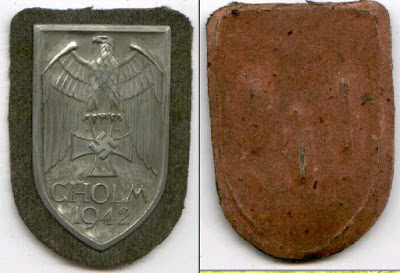
The Cholm shield was instituted on 1/7/42 and was
for any member of the armed
forces who served in a single, or all, military units between 21/1-5/5/42.
Entitlement was also open to those troups who
were killed or wounded in action
and for the airforce and navy personnel who assisted in evacuation of the said wounded.
This is the rarest official shield to be
instituted, as less than 5500 soldiers
would have been eligible and most of them would have perished in Russia.
Award documents were signed by General Major
Scherer who was the fortress Commander.
Bestowal for these awards ceased on 1/4/43, with the only exception being for the men who were MIA or POW`s.
Bestowal for these awards ceased on 1/4/43, with the only exception being for the men who were MIA or POW`s.
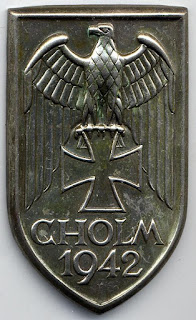
The shield design itself is very striking and
powerful looking and consists of
a shield shaped stamped metal, flat topped award which resembles a knight's shield in shape. The main
design is a wehrmacht eagle holding an Iron Cross
with a swastika and below this is the word "CHOLM" and the date "1942" under the word. There
are two main types of lettering the longer "M" and
the Shorter "M". So far, all shields that have been examined by us have been of pressed metal construction, either of magnetic metal or fine zinc. They appear to have a combination of the number of pins and also their positions ranging from 2 to 4 affixed on the back. This in turn passes through a backing cloth whose colour can range from basic army green being the most
common, to luftwaffe, then navy and panzer. There is speculation as to the two different types of backing shape, one type follows the design of the shield, whereas another is a long oval shape. One person has put forward the theory that the long oval shape types in steel were the first to be issued and the zinc ones were replacements. Personally, I discount this theory as we
have found combinations of both types on both backings.
the Shorter "M". So far, all shields that have been examined by us have been of pressed metal construction, either of magnetic metal or fine zinc. They appear to have a combination of the number of pins and also their positions ranging from 2 to 4 affixed on the back. This in turn passes through a backing cloth whose colour can range from basic army green being the most
common, to luftwaffe, then navy and panzer. There is speculation as to the two different types of backing shape, one type follows the design of the shield, whereas another is a long oval shape. One person has put forward the theory that the long oval shape types in steel were the first to be issued and the zinc ones were replacements. Personally, I discount this theory as we
have found combinations of both types on both backings.
With regards to copies, we have seen several
different types from solid metal
castings, to good quality stampings. These have all been in the wrong type of metal. Also there are major
differences between the styles of the eagle's
head on the originals to the reproductions.
With the re-institution of the 1957 awards, this award was sanctioned. The only design change is the omission of the swastika. The award was only worn on a ribbon bar and the shield itself was sold as a commemoration piece.
With the re-institution of the 1957 awards, this award was sanctioned. The only design change is the omission of the swastika. The award was only worn on a ribbon bar and the shield itself was sold as a commemoration piece.
Prices:
To date, you should expect to pay at least
£1450.00 for a good example of a
Cholm Shield on army green backing and add an extra £50.00 for luftwaffe and £150.00 for navy/panzer issue,
both steel or zinc.
Friday, 6 May 2016
The Defence Wall Honour Award
 |
| West Wall Medal Document |
 |
| West Wall Medal Early and West Wall Medal Late for Comparison Back |
This medal which is more commonly called the West
Wall Medal was originally issued
for the construction of the German Siegfried line in response to the France Marginot Line. Instituted
on the 2nd of August 1939, it was given both
to Civilian Construction workers for ten weeks labour or for 3 weeks service for the military for
fortification service. The first actual award of
this medal took place on the 23rd November 1939 when Adolf Hitler awarded Dr Fritz Todt, as well as other high
ranking officers and party officials this
award. It should be noted that members of the armed forces who had received the Memel or Oct 1938 medal were not
authorised for this award, although
several men did in fact acquire it.
The award was re-instituted again in 1944 on the
10th of October by Hitler as a
reward and also encouragement to both soldier and construction workers who had been working on both
the channel defences and later the Siegfried
line to bolster their defence of Germany as well as morale. Members who held the awards were authorised a bar.
To date, no known example has surfaced.
 |
| West Wall Medal Early and West Wall Medal Late for Comparison Front |
The award in both cases is the same, only the
metal composition changed. The
award is oval shaped and to the front is a nazi army eagle holding a swastika over a crossed sword and
spade, with a pill box below. On the edges are
a wreath of oak leaves. To the reverse it has again, the oak leaves wreath with
the letters "Fur Arbeit Zum Schutze Deutschlands" (For work on the defence of Germany) to the centre.
The award is made of bronzed/brass firstly
but this gave way to bronzed zinc for the 1944 issues. The award suspends from a brown and white ribbon
that ranked below the Iron Cross, War merit
Cross etc Just behind the occupation awards.
 |
| Early Packeted West Wall Medal Front |
Most collectors will have the 2nd pattern type in
their collections, but the first
early brass types are well worth hunting down. When awarded, the medal usually came in a paper packet
with the title to the front and the maker's
name to the reverse. One type that turns up more than any is worth noting and that is "CARL POELTATH
SCHROBENHAUSEN". Many people have been concerned
by these, as a large number appeared on the market place in about 1989. All were in near mint and the paper
award packets are mint, but what concerned
some people are the spelling mistakes that have condemned these all as fake. The fault lies in the place name
which does have on some, a spelling mistake,
but the confusion is then compounded by some people's misunderstanding of the German font
used. On some paper packets, the town's name appears
to look like "Schrobenhanfen" whereas it should be "Schrobenhausen". This is correct, but
what has not been taken into account
is firstly the letters are put in by hand and a "u" has been put in upside down making it an "n"
and that the font we are used to, has the "s" in "SchrobenhauSen" appearing
like the letter "f" . This is further confirmed when you turn over the paper packet
and read the front. It is "Deutsches" but appears as "Deutfches".
 |
| Early Packeted West Wall Medal Back |
The award also came with a citation that took on
many different forms, but all
follow the same lay out and have the man's name and unit typed or written into
it, with a seal or stamp to the bottom of the document..
Price of Award
You should expect to pay about £25.00 for a late
war type in paper packet and
about £45.00 for an early award.
As for copies, probably due to the large number of originals the only ones we have seen
have been cheap lead examples.
Monday, 11 April 2016
An Overview on German and British War Medals
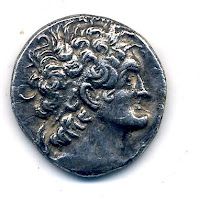
Once
one's occupation as an antiques dealer comes out in conversation, the next most
likely question asked is "What do you specialise in?” In my case, the
answer is coin, medal and watch dealer.

This
normally follows with "What's the oldest item you have had"? The next
obvious one is “Have you ever had a Victoria Cross, or a Knights cross"?
As far as I am concerned, to answer all three;-
1.
Some ancient coins,
2.
No I have never owned a Victoria Cross, and
3.
Yes, I have owned a Knights Cross.
Further
questions usually follow, such as whether you know the owner, what he was like,
what's it worth etc, all good questions, but most focus on the values.
Then
thoughts turn to, what's your favourite item, why and so on.
With
all of the above in mind, I thought I would showcase some nice items, not
necessarily just rare but interesting, over the next few months.
To
begin with though, is a very rare award, it's a badge that was given during the
time of great turmoil at the beginning of World War Two. To look at the badge
you perhaps wouldn't initially appreciate the rareity of the piece. It is an
award that was given to American Volunteers, who served in Finland in
1939-1940, who fought against Russia in the winter war, after Russia invaded
Finland.

What
makes this item so interesting is that one year later, Finland was again
fighting with Russia but on Germany's side.
(One of England Volunteers was the well known actor Christopher Lee, who
also served in Finland, and received a Finnish British War Medal with Bar, which they could
for a time wear on their tunic). So a few years later, these servicemen could
be fighting with their USSR allies against the Finnish/Germany. It is also stated by some that a few soldiers
stayed on in Finland to train and learn arctic warfare and may well have been
involved with Finnish units attacks on the Russians in 1941-1944. Finland was
and is a unique country and this is one of those rare items that just go to
show this. For more information visit Jamie Cross Collectibles.
Tuesday, 29 March 2016
War Medals for Sale over Online Market
War is very serious
matter for every country, during the war period the whole nation needs to
commit scarifies in various ways. Thousands of brave men and women of the
country lost their life on the way of protecting their nation. So after every
war brave military men and women are awarded with medals, these medals are very
valuable because many emotions are associated with these War Medals. Now
civilian people those have huge amount of money and high end of respect for
their military they prefer to collect Military War Medals. So throughout the
world the demand of war medals are very huge and very limited sources are
available where people can good war medals. These are some online source from where you can get the most authentic War medals for sale, where very
qualitative and unique medals are available those were used to tribute brave
militants in part days after big wars.

All war medals are
important and valuable but some medals those are associated with great wars
like World War One (WW I) or World War Two (WW II) etc are very valuable,
military collectors (people those collect military products) agreed to give any
amount for a good quality and rare military medal associated with WW I or WW
II. In current digital age people use digital technology for buying and selling
of old war medals, these are many online shopping sites and e-commerce stores
are present around the globe those makes available war medals for needy
peoples. If you also want to keep a war medal with you and want to feel the
charm of holding that thing on your hand, then go online today and select a
unique and valuable war medal for you. These are available over online market
in very authentic price. For more
information refer Jamie
Cross Collectibles.
Subscribe to:
Posts (Atom)